How to Protect Your Child with Special Needs as They Become an Adult — Guardianship, SSI & Trust Planning in Texas
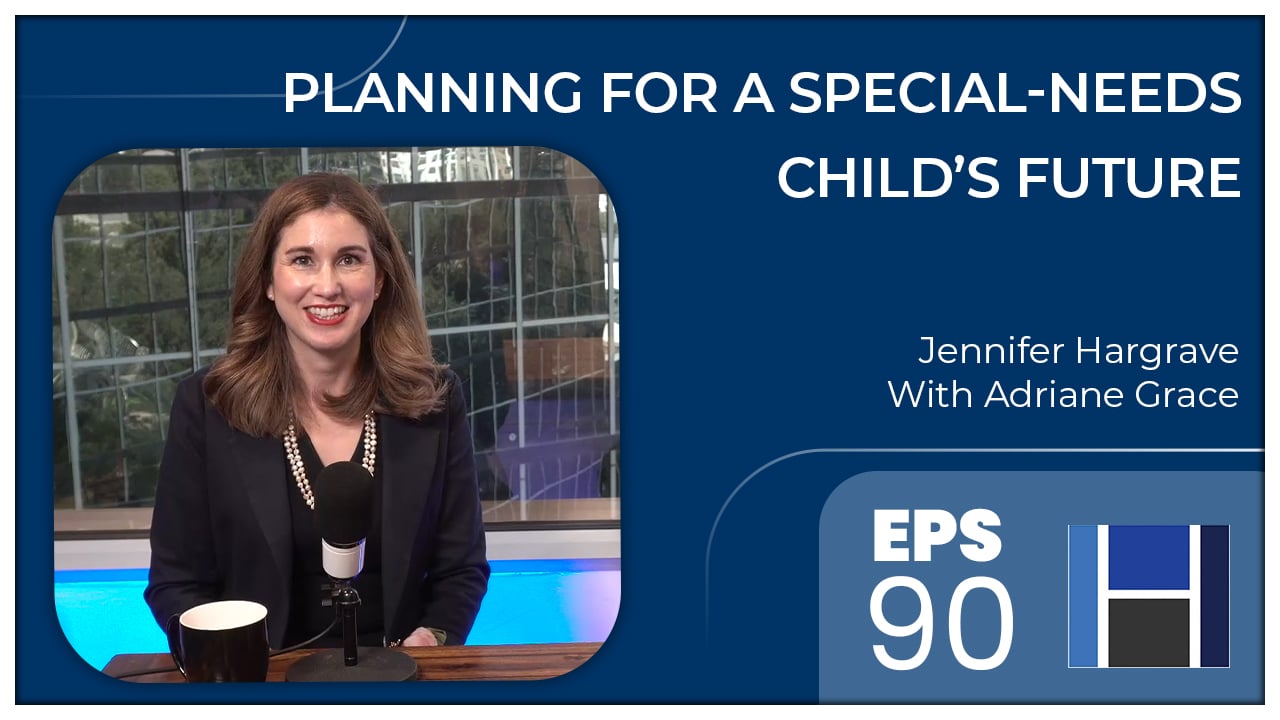
Dallas divorce attorney Jennifer Hargrave sits down with estate planning lawyer Adriane Grace, founder of Grace Estate Law, to walk parents through long-term planning for children with special needs. They cover how and when to start, the differences between guardianship and alternatives, why to set up a special needs trust before age 18, and how SSI and Medicaid eligibility work (including asset limits and how post-18 child support is counted). Adriane explains documentation needs (medical, neuropsych, school IEPs), timing (begin planning around age 16; you can file for guardianship at 17½), and coordination during divorce—like agreeing in the decree who will seek guardianship and manage benefits. The conversation also touches on Social Security’s Disabled Adult Child benefits tied to a parent’s earnings, and practical pitfalls that can delay medical decisions if guardianship isn’t in place. It’s a clear, compassionate guide to protecting a vulnerable child’s care, benefits, and autonomy into adulthood.

Transcript
Jennifer Hargrave:
If you have a child with any kind of special needs, you’re going to want to tune in today. We’re talking about what parents of kiddos with special needs need to know for long-term planning—estate planning, benefits, guardianship, all the things. My guest is Adriane Grace, owner and founder of Grace Estate Law. She’s worked in this area for many years and brings a wealth of experience, especially from the Social Security Administration. She’s going to talk with us about benefits and planning. Adrian, I’m so happy to have you here.
Adriane Grace:
Thank you for having me.
Jennifer:
Let’s dive right in. What constitutes a “special needs” child?
Adriane:
I define a special-needs child as someone who will need lifelong support due to a physical or mental disability—or a combination of the two. Often they won’t be able to work full time. There’s a spectrum: sometimes it’s evident early in life; other times it doesn’t become clear until the teen years or later.
In our guardianship and special-needs planning practice, we see a range of disabilities. Developmental conditions like Down syndrome (including mosaic trisomy) are common, as is autism. Some children are diagnosed in toddlerhood; others not until adolescence. We also see physical disabilities arising from conditions such as seizure disorders that can lead to complications, surgeries, and even brain injury from the seizures or the procedures themselves. And some individuals have autism alongside significant mental-health conditions—schizoaffective disorder, schizophrenia, bipolar disorder—which compound challenges and increase the need for support.
Jennifer:
When along that journey do parents usually contact you? If there’s an early autism diagnosis, do they reach out to a guardianship attorney right away?
Adriane:
Often not. Most parents first reach out when their child is nearing the teen years because the school district’s transition services start educating them on what’s next. That said, some families do contact us earlier to set up estate planning and special-needs provisions for peace of mind—so future caregivers are identified and prepared.
Jennifer:
When parents contact you, what do you need to know first? What should they be prepared to provide?
Adriane:
Parents typically come for two things: (1) special-needs planning and (2) guardianship. They want to know if they’ll need to be their child’s legal guardian after age 18 so they can continue making health-care and financial decisions.
To assess that, I need to understand the disability’s impact. I review medical records, neuropsychological evaluations, and school documents like IEPs. These help determine whether a full guardianship is appropriate or if alternatives could work.
Jennifer:
Are there decisions that should be made before a child turns 18 that will affect benefits?
Adriane:
Yes. At 18, a young adult can apply for Supplemental Security Income (SSI), a needs-based disability benefit for those who can’t engage in full-time, gainful employment and who lack sufficient work history. SSI has strict income and asset limits—most notably, the resource limit is $2,000, and that number hasn’t changed since 1989. Families must avoid placing assets in the child’s name and ensure relatives don’t leave inheritances directly to the child.
We also have to watch income streams. Profoundly disabled individuals may not have job income, but post-18 child support is a big issue in divorce cases. Under federal rules, child support paid for a disabled adult child is deemed the child’s income, which can reduce or disqualify SSI and, by extension, Medicaid. If parents want both ongoing support and SSI/Medicaid, we need to structure that support properly—often via a trust.
Jennifer:
Let’s talk more about SSI eligibility. What do you have to show?
Adriane:
Two things: financial need (income/resources under limits) and disability under Social Security’s rules—meaning the person can’t sustain full-time gainful employment due to medically determinable impairments. The disability framework is complex, and I help families determine whether their child fits within it.
Jennifer:
Who provides the opinions and documentation—pediatricians, Social Security doctors?
Adriane:
It depends on the disability and the documentation history. For example, Down syndrome is often documented before or at birth with genetic testing. Many autism diagnoses are made early, followed by special education placement, but families may not update evaluations for adulthood. We often recommend adult neuropsych assessments or psychiatric evaluations to document functional limitations for both Social Security and probate court in a guardianship. Evidence can come from neuropsychologists, psychiatrists, and other medical specialists.
Jennifer:
Once a child is determined disabled, what are the next steps? Guardianship, special-needs trusts, Social Security—it’s a lot.
Adriane:
Overwhelm is the number one thing I hear. Everything is intertwined around age 18. At 18, the law presumes full capacity—even for someone who has always needed help—so parents suddenly lose decision-making authority. If you want protections in place by that birthday, start early. I like to talk with families around age 16.
First, we update the parents’ estate plan. If they pass away and leave assets to the child, those assets should flow into a special-needs trust that Social Security will exempt for resource counting so the child can remain eligible for SSI/Medicaid. Second, understand that guardianship is intrusive: it’s a probate-court process, the proposed ward gets their own attorney, family members must be notified, and the judge will scrutinize whether less-restrictive alternatives would suffice. That’s why we gather robust documentation up front.
Jennifer:
Sometimes the need isn’t obvious until after 18. What if a parent realizes at 20 that their child won’t be self-sufficient?
Adriane:
It’s not too late. Texas requires families to consider alternatives to guardianship first—such as medical and financial powers of attorney and HIPAA releases. If those fail, that’s useful evidence for the court that guardianship is necessary. But delaying can have consequences. I’ve seen families miss windows for surgeries or clinical programs because they lacked a guardian authorized to consent. The guardianship process can take about six months, so earlier is safer.
Jennifer:
For a 16-year-old, what should parents put in place first?
Adriane:
At minimum, a special-needs trust. Even for children who appear typical but have mental-health diagnoses, financial exploitation risk is higher. Trusts protect inheritances, gifts, and structured support. Then, evaluate whether guardianship will be needed at 18 or if alternatives could work, and prepare the documentation either way.
Jennifer:
How does co-parenting and divorce factor in? Ideally, what should divorcing parents do?
Adriane:
Ideally, make clear agreements in the divorce orders about:
- Who will seek guardianship at 18 and serve as guardian,
- Who will apply for Medicaid and Social Security benefits, and
- Who will receive/manage those benefits for the child.
Texas allows co-guardianship if parents are joint managing conservators, but I generally don’t recommend appointing both. In practice, third parties (doctors, schools, banks) often insist on consulting both, which slows care and creates friction. Usually one parent provides the majority of day-to-day care; consolidating authority with that parent reduces confusion and risk. The non-guardian parent still has rights to notice and can seek court-ordered visitation terms if needed.
Jennifer:
Family law versus probate court—can you clarify jurisdiction?
Adriane:
Divorce and custody are in family court. Guardianship is in probate court. The divorce decree can set expectations—e.g., which parent will file for guardianship—but the probate judge ultimately decides guardianship. If parents can’t agree, you risk a contested proceeding, higher cost, delays, and even the court appointing a professional guardian instead of either parent.
Jennifer:
You mentioned Medicaid and retirement. How do those benefits work over time?
Adriane:
In Texas, adult Medicaid access is typically through SSI—get SSI, and you automatically get Medicaid. Most families care more about that health coverage than the cash. SSI has the strict limits we discussed.
Later, when a parent retires, becomes disabled, or dies, the adult child may qualify for Title II Disabled Adult Child (DAC) benefits based on the parent’s earnings record. Think of the parent’s Social Security as having a family benefit “pie.” Eligible family members—spouse, minor children, and adult disabled children—can receive slices. The adult child’s benefit will depend on the parent’s record and how many family members are drawing. Many children start on SSI at 18 and later transition to DAC when a parent’s status triggers eligibility.
Regarding amounts: SSI has a maximum monthly benefit (for 2025, $967). Countable income reduces it dollar-for-dollar under complex rules. DAC amounts vary because they’re tied to the parent’s earnings and the family maximum.
Jennifer:
Bottom line, if families don’t take these steps, kids can miss out.
Adriane:
Yes—on tens or even hundreds of thousands of dollars over a lifetime, and on timely medical decisions. Early planning—trusts, documentation, and a clear guardianship or alternative plan—protects benefits and care continuity.
Jennifer:
Adriane, thank you for breaking this down. For those listening, we’ll include contact information for Grace Estate Law if you’d like to follow up. And please stay tuned for future episodes as we continue exploring issues affecting families today.
If you would like to learn more about Jennifer Jones and her mission, please visit: