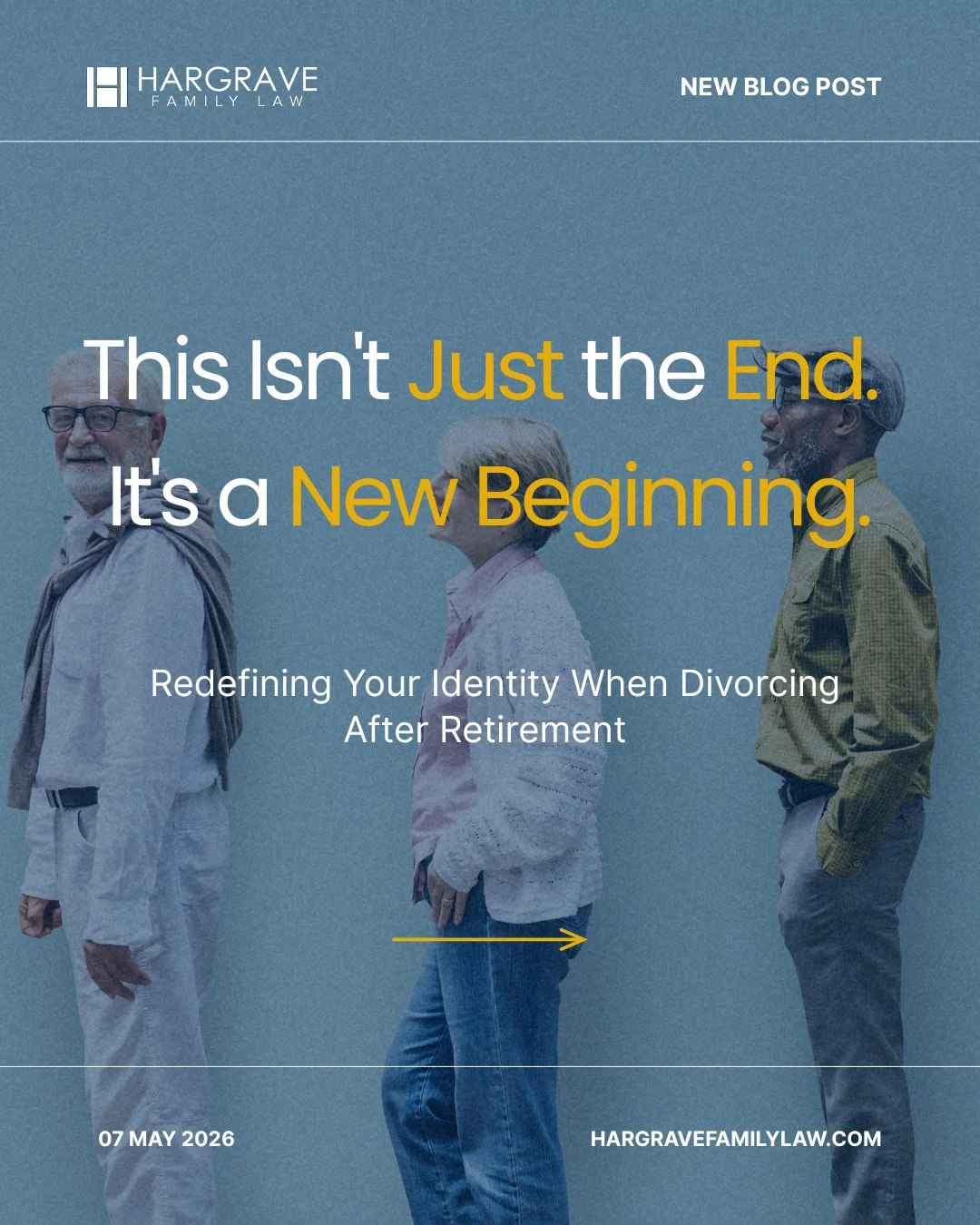
Introduction: Divorce is a Turbulent Life Event
Divorce represents one of the most challenging life transitions you can experience. You enter marriage anticipating a permanent bond between two individuals, and divorce means your future will look very different than the life you had all planned out. Naturally, whenever a broken marriage ends, people go through a range of powerful emotions – sadness, hope, anger, relief, regret, fear, excitement – sometimes all at once. Processing these emotions often requires energy at a time when you may feel depleted. Couple this with financial disruption, breaks in familial relationships, and changing social circles and personal connections, and it can feel quite daunting.
Often people find it challenging to recalibrate their identity after major life transitions. While married, you’ve been a spouse and part of a couple, and that has driven how your family, your social circle, possibly even your work colleagues, identify you and relate to you. Just like a parent whose nest empties leaving a quiet house, or a retiree who loses the value they felt at work, you may now feel a bit off-balance as you try to redefine your identity and place in the world again.
And divorcing later in life, often called a “gray divorce” for those over 50, empty nesters, or retirees, can bring all three of these scenarios all in the same phase of life. As a retiree, you may have already had a productive work life and navigated that transition from seeing peers daily to an occasional get together. As a parent, your children may have flown the nest and be soaring on their own. As a spouse, your adult identity in society has largely been shaped and conditioned by your status as a married person, but now, you will have to reshape your identity yet again.
In this post, we’re going to discuss a few ways you can go about rediscovering your identity after a gray divorce. Some might require you to look outward, while others require you to look more within. One thing to keep top of mind: while divorce is a very challenging chapter, you deserve to rebuild your new life with peace and even reclaim your joy.
Rekindle Old Friendships
As many modern relationship experts have emphasized, the construction of our individual identity is bound up in our relationships with other people. In other words, we partially form our sense of who we are, our sense of individuality within society, directly through our social connections with the people in our immediate circle and our most active relationships. This is where the colloquialism about each person being the sum total of the people around them comes from – we reflect in part who we are as a direct result of our closest personal associations.
Perhaps one of the best pieces of advice to reclaiming your identity after a gray divorce is to rekindle existing friendships, those that you lost touch with due to the demands of parenting, working, and maintaining your home and marriage. Who are the people you miss the most? That brought out the best in you? That made you belly laugh? Or that understood you without saying a word? Consider reaching out, they may be excited to reconnect as well.
Rekindling old friendships could more quickly allow you to realign with your core values, who you are and always have been. Trips down “Memory Lane” can reinforce a strong sense of personal identity. Reestablishing ties with someone with whom you already have a shared history may also be an easy first step.
Strengthen Connections with Family Members
In your global network of personal relationships, none usually hold a greater level of importance than your connections with your family members. After a turbulent, life altering event such as a divorce, you have the opportunity to reconnect and strengthen bonds with your immediate family members – parents, siblings, half-siblings, first cousins, and so forth. These are people who know you well, the real you, but due to the busy demands of life may have lost their connection with you. Leaning into your immediate family post-divorce can be a very powerful way to re-center yourself and reconfigure your identity within a safe space. Our immediate family is how we first learn about ourselves and start to develop our self-concept, and so diving back into these crucial relationships may be a gentle place to start post-divorce.
Pursue Your Personal Passions & Hobbies
An exciting option is to vigorously pursue your passions and hobbies, either those cast aside or those never explored. When most people think of “who they are,” they tend to think not just about their social network but also the activities they engage in – including activities beyond the workplace. For retirees, pursuing passions and hobbies may be doubly significant given the fact that work related activities are not a central part of their identity any longer. Maybe it’s your long-forgotten love of painting, or those dance lessons you’ve always wanted to take, or learning a language in preparation for traveling. Consider making the time to explore some options that once nourished you or that always enticed you. Pursuing passions and hobbies will not only help you rediscover your personal identity and provide pleasure, they can lead to new friends and social circles with others who have something in common with you.
Be Kind to Your Mind & Body – Regain
Sometimes we find that the demands of parenthood, working, and being a spouse have not left much time to care for ourselves. Research constantly shows us that movement has tremendous physical and mental health benefits, even more so when we are a bit older. If you never found the time to get into the habit of long walks, to give yoga or meditation a try, or to join a group exercise class, why not give them a try now! Establishing a routine for physical movement that involves others has the added benefit of expanding your social circle. Social connections are just as vital to our mental health as exercise is to our physical well-being.
Look for ways to stack these opportunities. Healthy cooking classes double their benefit by providing nutritious new recipes while meeting others with a similar interest. Learning to play mahjong with a group that plays weekly helps keep your brain active while having fun and meeting new friends.
Consider the Idea of a New Relationship
As stated earlier, our social connections in many ways nourish our identity, and romantic relationships are among the most powerful of all social connections. Of course, rushing into a new romantic relationship too soon after your divorce may not be wise; relationships post-divorce at any age should be approached intentionally. Care should be taken to ensure you are healed and ready to authentically open your heart again rather than disappear into a new relationship because you are fearful of being alone. Or you may find that healthy companionship is enough right now if you’ve found someone who shares your love of travel or thriller movies. A new connection needn’t necessarily lead to a new marriage to help us explore who we want to be in this new phase.
Contact the Hargrave Family Law for More Information
Reestablishing your identity when divorcing after retirement is a challenging prospect. Often, divorce, an empty nest, and retirement all tend to take a heavy toll on us in many ways. And they also present us with opportunities to reconnect with parts of ourselves we’ve forgotten, or to ignite new passions to explore.
To recap:
- Take time to process the emotions of this life transition
- Rekindle old friendships or develop new ones
- Strengthen your relationships with family members
- Pursue your personal passions and hobbies
- Consider finding a companion to share your favorite pastimes with
Take the chance this life phase gives you to realign with your core values, pursue passions, and rekindle joy.
For more information on divorcing after retirement, the essentials of the divorce process generally, or how to file for divorce in Dallas, reach out to us at Hargrave Family Law today.
Contact the Dallas divorce experts at Hargrave Family Law today for a complimentary case evaluation to discuss your options. We’re here to help.