
Divorce is a very personal journey, and every marriage has its own unique circumstances that influence the overall divorce process. For military families in Dallas and across North Texas, the process often comes with additional complexities that a Dallas military divorce lawyer is specifically trained to navigate — from deployments and relocations to dividing pensions and handling custody across state or international borders. These challenges not only played a role in their marriage but will continue to playout in the divorce — from deployments and relocations to dividing military pensions to handling custody across state or even international borders.
At Hargrave Family Law, we understand the dedication and sacrifice every member of military families makes to support our country and protect our freedom. If you’re considering divorce and one or both spouses are active duty, reserve, or retired military, it’s critical to know your rights, options and the legal nuances involved in a military divorce. This blog is an introductory resource to guide you on your journey.
Why is Military Divorce Different?
While military divorces follow the same rules contained in the Texas Family Code as civilian divorces, several federal and state laws also come into play. Working with an experienced military divorce attorney in Dallas ensures you understand how these laws — including the SCRA, USFSPA, and the 20/20/20 rule — affect your family:
- The Servicemembers Civil Relief Act (SCRA): This federal law allows active-duty members to make a request for a temporary stay (or delay) in civil proceedings, which would include a divorce, if military duties prevent them from participating in their representation.
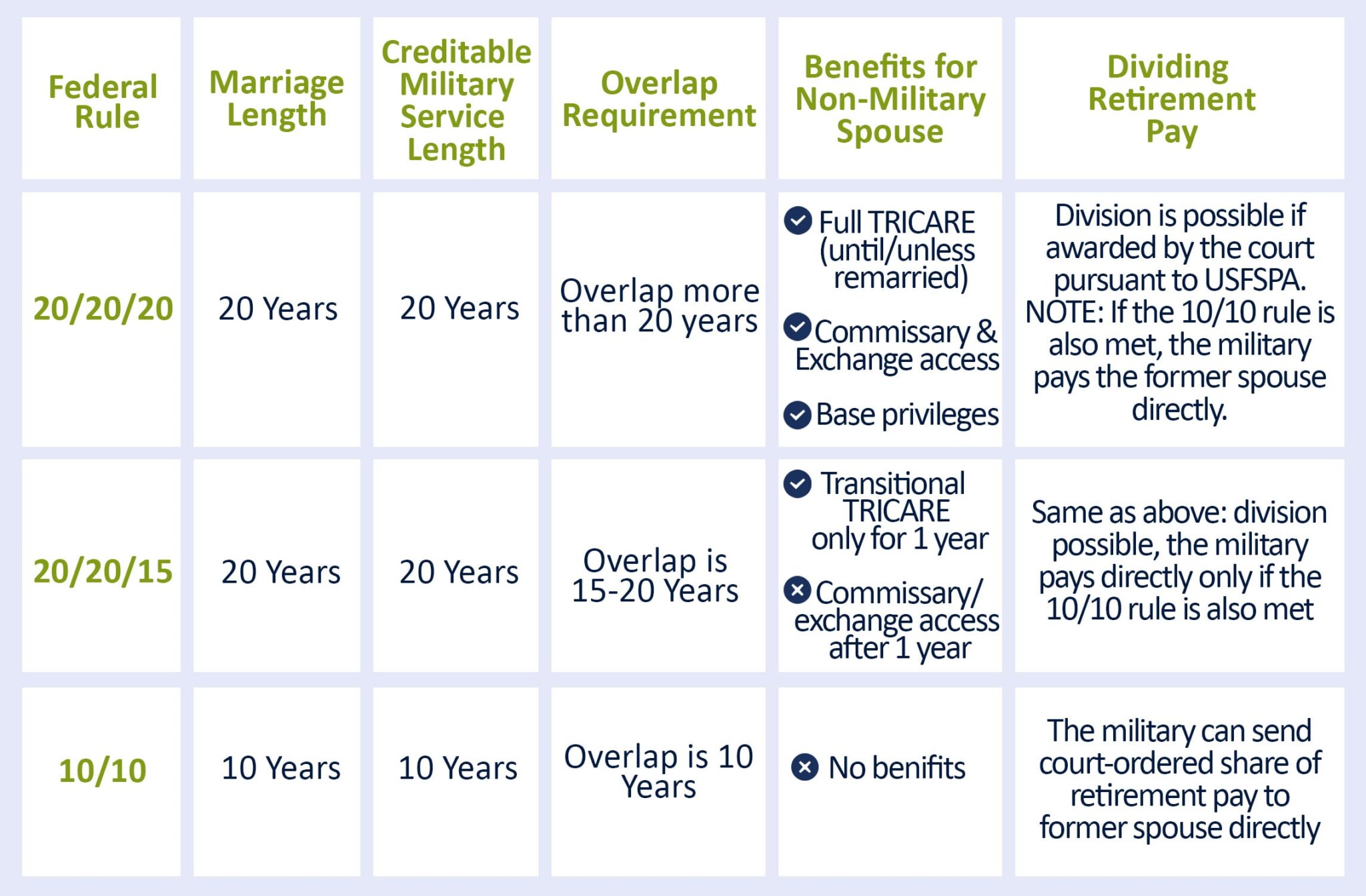
- Military Pensions: Dividing military retirement pay requires compliance with the Uniformed Services Former Spouses’ Protection Act (USFSPA). The USFSPA allows states to treat military retirement pay as community property and divisible in divorce. The 10/10 rule applies (see chart below), which states a former spouse can receive a share of retirement pay if there was at least 10 years of marriage and at least 10 years of creditable service during that marriage.
- Tricare and Commissary Benefits: The length of your marriage and any service overlap will play a part in determining whether a spouse may also qualify for Tricare (healthcare), commissary benefits and base access under the “20/20/20” rule (see chart below). It requires that all three of these qualifications be met: at least 20 years of marriage, at least 20 years of creditable service toward military retirement, and at least 20 years of overlap of the marriage and the military service. If the marriage and service only overlap for 15 years, then these benefits would only be available for 1 year.
- Child Custody and Deployment: Custody arrangements in a military family must account for deployments, relocations, long absences, and two homes in separate states or countries. A skilled Dallas military custody lawyer helps parents create flexible, child-centered parenting schedules that work during and after deployment. Texas law prioritizes the best interest of the child, and courts may allow temporary custody modifications when a parent is deployed or absent for long periods of time.
Chart Comparing Military Divorce Rules
Other Key Issues in Dallas Military Divorces
1. Child Custody and Visitation
Military service obviously often involves frequent relocations and long absences due to deployment or other service requirements. These special considerations will play a part in your child custody agreement. Working with an experienced Dallas Divorce attorney who knows how to navigate military divorces and work with North Texas family courts will help you create custody schedules that support stability for children while allowing service members to maintain strong relationships with their children. Options to allow your parenting schedule to be flexible during deployment or extended absences may include:
- Temporary custody transfers or modifications triggered by a deployment or extended absence.
- Virtual visitation through video calls.
- Adjusted visitation schedules when the parent returns home to provide “make up time”.
2. Spousal Support (Alimony)
Spousal maintenance, especially permanent spousal support, is not common in Texas. Temporary spousal support while the divorce is pending, and possibly for a brief time after it’s finalized, is possible if a judge believes certain criteria are met. However, if the non-military spouse sacrificed employment and career opportunities due to frequent relocations or deployments or is a caretaker for a child with special needs for example, the court may consider spousal maintenance. Military cases often highlight the unique sacrifices made by the non-service member spouse, definitely making spousal support an option to explore.
3. Jurisdiction and Case Filing
Military families often move quite frequently, raising jurisdictional questions regarding where to file for divorce. Military families stationed at bases like the Naval Air Station Joint Reserve Base in Fort Worth or those living and commuting from Dallas-area suburbs such as Plano, McKinney, Frisco, or Allen may wonder how to choose a county in which to file. In Texas, either you or your spouse may file if you’ve been stationed in the state of Texas for at least six months and been living in your county for at least 90 days. If you and your spouse are living in different states but the children primarily live and attend school in Texas this will also play a significant role in deciding jurisdiction for the divorce. Working with an experienced Dallas divorce lawyer ensures you understand how jurisdiction fits into your family’s situation, and makes certain that your case will be filed in the correct jurisdiction to avoid unnecessary delays or costly mistakes
Non-Adversarial Options for Military Families
Our team definitely believes that divorce doesn’t have to end in warfare. Oftentimes maintaining a common focus will allow each party to be able to advocate for what’s important to them in a collaborative atmosphere. Keeping the best interest of the children at the center is also essential for the success of continued coparenting as well as creating an environment that allows their children to thrive. In fact, many military families choose Collaborative Divorce or mediation to resolve issues privately, respectfully, and in line with their core values. These techniques are especially valuable for military families in which ongoing cooperation and flexibility are essential. Using these processes, the parties focus on finding creative solutions that will serve their family, and these alternatives to traditional litigation may help create and protect:
- The emotional wellbeing of children.
- The privacy of military service members.
- Each spouse’s financial stability during and after transition.
- A healthy co-parenting relationship.
- The development of conflict resolution skills.
WE WILL SPEAK FOR YOUR RIGHTS
Contact us for a free, no obligation consultation to discuss your options. You may find that you are entitled to payment if your claim was denied or underpaid.
Schedule a Case Evaluation
Why Choosing a Dallas Divorce Lawyer with Military Knowledge is Important
We’ve talked about how a military divorce involves more than just what you would expect in a simple divorce. It requires a deep understanding of the applicable federal regulations, the Texas family code, a familiarity with jurisdictional issues, and the unique emotional realities of military life. At Hargrave Family Law, we work with military families across North Dallas and surrounding communities, providing guidance tailored to your unique family’s situation, keeping you and your children at the forefront of our advocacy.
Finding someone who can expertly advocate for what matters most to you sets you up to be empowered to make informed decisions about your next chapter. Whether you’re an active-duty service member, a supportive military spouse, or a veteran, our team is ready to help you write your next chapter and move forward with clarity and confidence.
Divorce Is the Beginning of a New Journey Toward Peace
Military life is usually filled with transitions, and a divorce is another one that can be challenging. When done with intention and a focus on your future rather than the past, this transition can set you up for a brighter future full of joy and purpose. With the right legal guidance from a Dallas military divorce lawyer, you can navigate your military divorce in North Dallas in a way that honors your family, protects your future, and sets you on a path toward peace. At Hargrave Family Law, our skilled team is committed to helping good people end broken marriages and compassionately support our clients through every step of the divorce process.
Reach out to schedule your complimentary case evaluation today and let’s discuss how we can support your family through this next chapter and into your next filled with hope.